Learn how weavers, manufacturers, and brands can showcase and sell Banarasi sarees and collections on Weave 365 to reach wholesalers, boutiques, resellers, online sellers, and exporters.
Selling Banarasi Sarees on Weave 365: A Practical Guide for Weavers and Brands
Most Banarasi weavers and manufacturers don't struggle with quality. They struggle with reach. You can weave the finest silk in Varanasi and still spend months chasing wholesalers and boutique owners one phone call at a time.
Weave 365 is a B2B platform built to shorten that chase — it puts your collection in front of verified buyers (wholesalers, boutiques, resellers, exporters) without you having to track each one down yourself. Here's how to actually get set up on it.
Get your photos right first
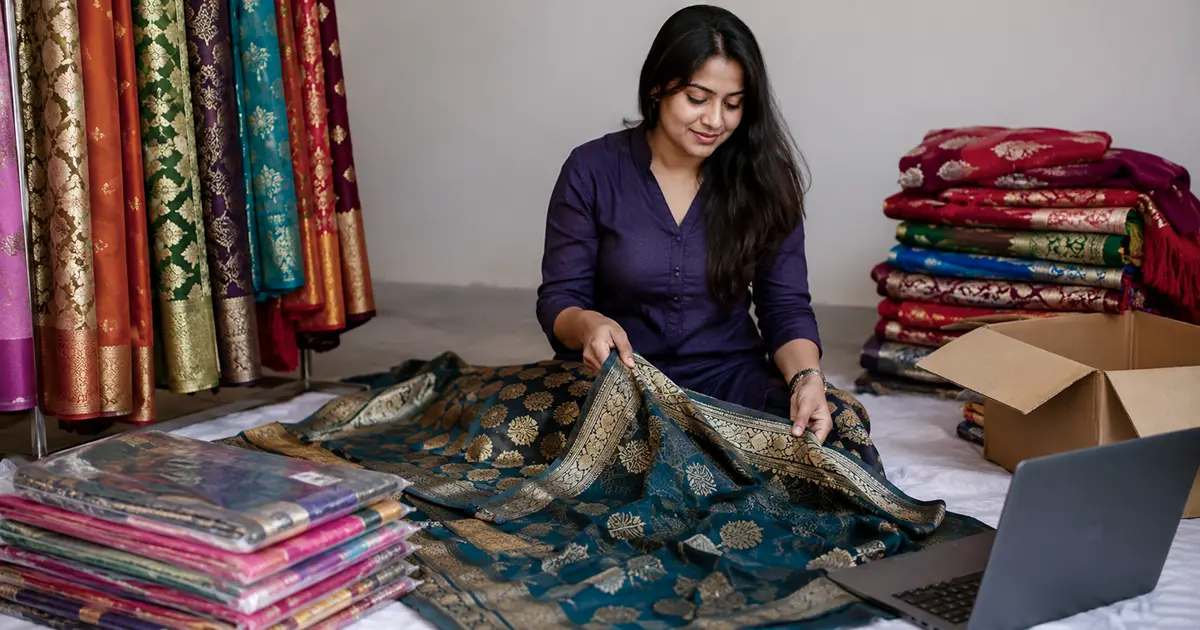
Buyers can't feel the silk through a screen, so the photos have to do that work instead. Shoot in good light, get close enough to show the weave and zari work clearly, and keep the style consistent across the collection. Buyers notice immediately when one product looks professionally shot and the next looks like it was taken on a flip phone in a dim back room.
Organize your product details before you list anything
Have this ready: images, descriptions, fabric type, colour options, sizing where it applies, and pricing. Buyers who are sourcing seriously move fast, and they move on to someone else's catalog the moment they have to ask questions you should've already answered.
Set up your seller profile
This is where you tell buyers who you are — business name, brand name, the categories you make, your manufacturing background, how to reach you. A thin profile makes a buyer hesitant to send money to a stranger. A clear one does a lot of the trust-building before the first message is even sent.
Submit your collection for review
Weave 365 checks submissions before they go live, partly for quality and partly so buyers aren't sorting through inconsistent or misleading listings. It's an extra step on your end, but it's also why a curated catalog tends to convert better than an open marketplace where anyone can post anything.
Get in front of buyers
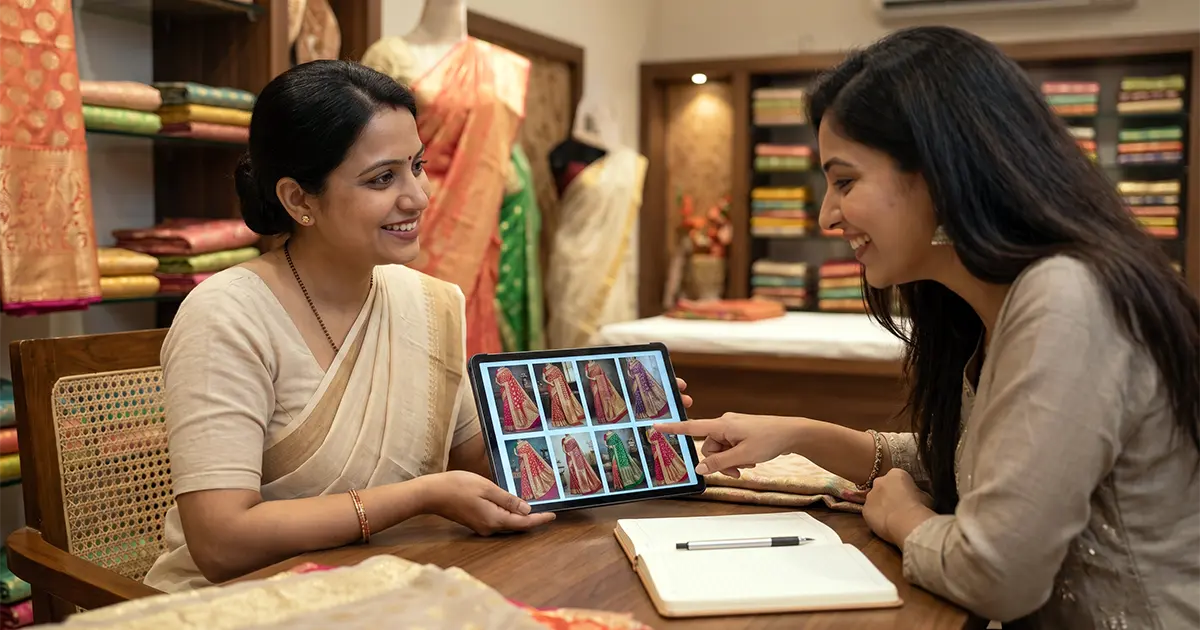
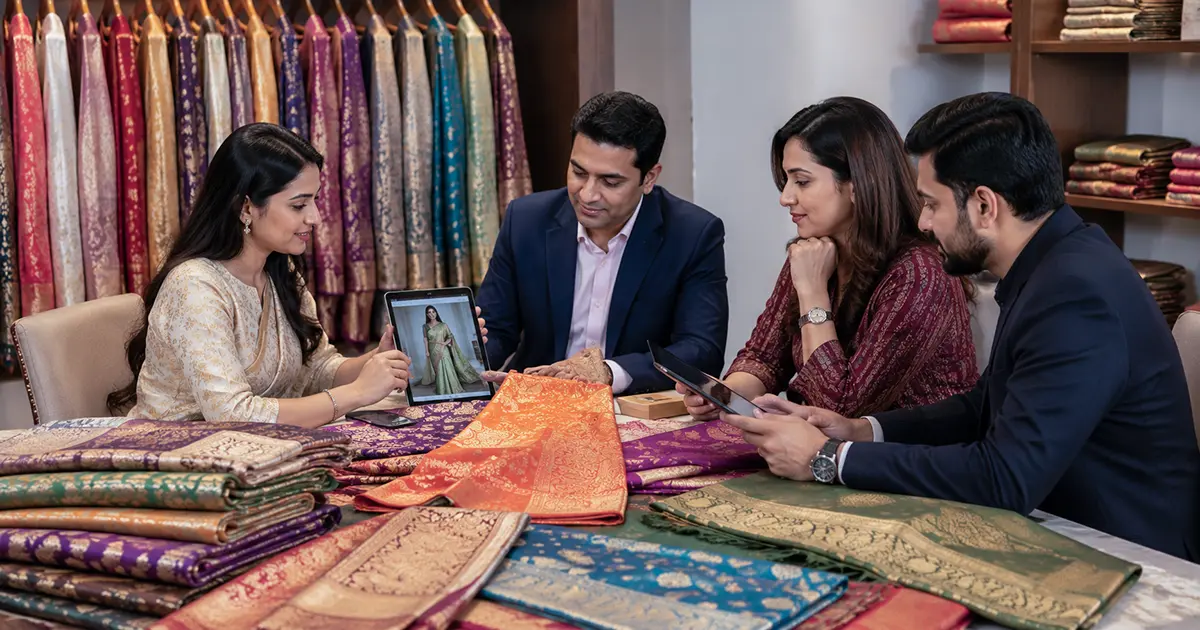
Once a collection is approved, it becomes visible to the people actually sourcing Banarasi wear on the platform: wholesalers, retailers, boutique owners, resellers, exporters. You stop pitching each of them one at a time. They come find you instead.
Keep the catalog moving
A collection that hasn't changed in six months stops getting clicked on. Add new arrivals, bring in wedding-season pieces at the right time, rotate trending designs in. People check back when there's a reason to.
Play the long game with buyers
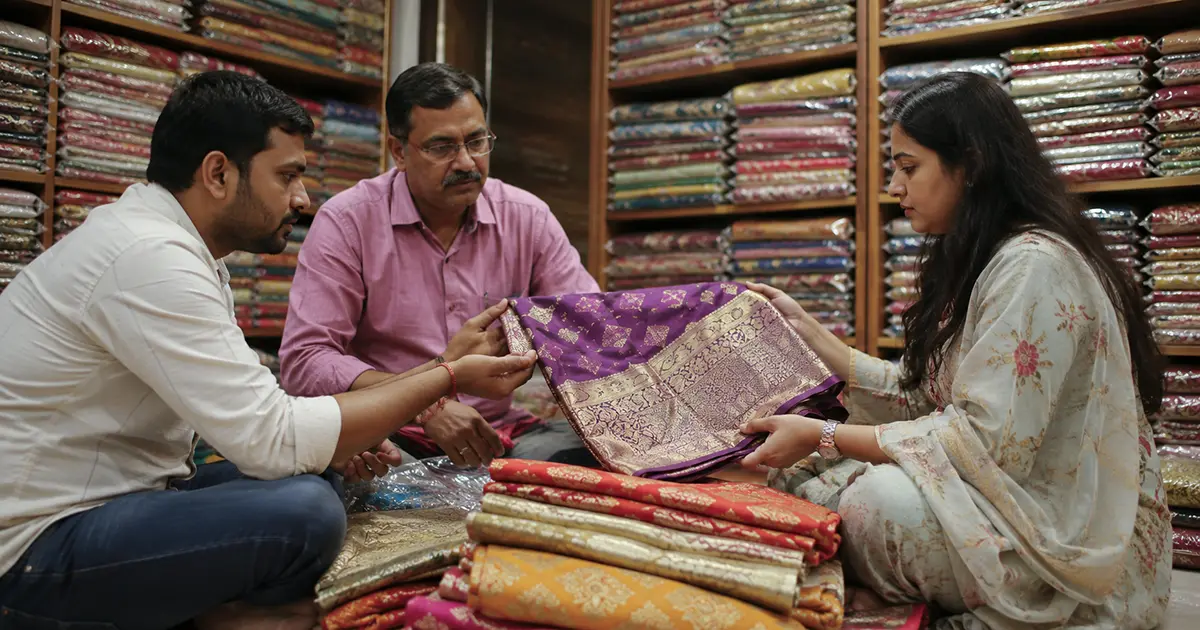
The real money usually isn't in the one-off order. It's in the buyer who comes back every season because pricing stayed fair, communication stayed clear, and the product showed up looking like what was promised. That kind of repeat relationship is harder to build than a single sale, but it's what actually keeps a business running.
Why bother with a platform at all
You could keep doing this the old way — cold calls, trade fairs, word of mouth. It works, just slowly. A platform like Weave 365 mostly just removes the part where you're guessing whether anyone on the other end is even looking to buy. The buyers are already there, already sourcing, already comparing catalogs instead of business cards.
Selling on Weave 365 isn't really about listing products. It's about putting your collection in front of people who are already looking for exactly what you make.