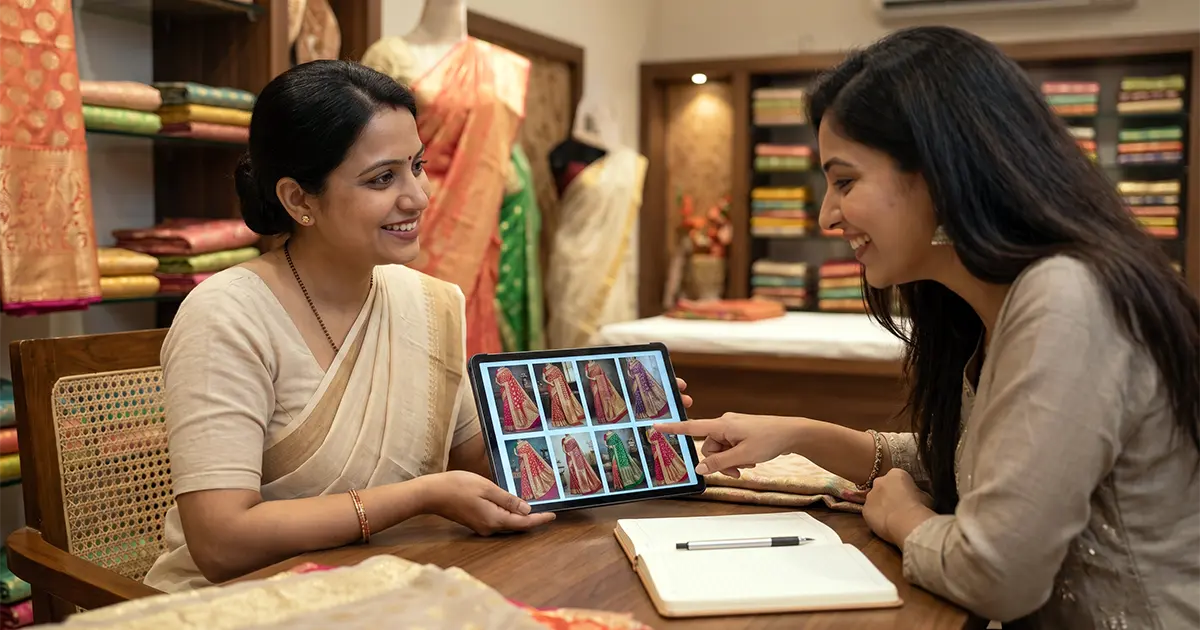
Choosing between heavy Katan Silk brocades and ethereal Kora Organza can be challenging for curators and shoppers alike. Let our master weavers explain the distinct yarn details, weight parameters, and draping features of these iconic fabrics.
Introduction: The Rich Fabric Tapestry of Varanasi
Varanasi, one of the oldest living craft centers in the world, is highly celebrated for producing some of the most complex, beautiful, and luxurious fabrics known to textile history. For centuries, the master weavers of Varanasi have combined pure natural fibers with metallic gold and silver threads to construct garments fit for royalty. Among the vast array of handloom weaves, two fabrics stand out as highly demanded, iconic pillars of Banarasi craft: Katan Silk and Kora Organza.
For boutique owners, regional retail curators, and fashion reselling partners, understanding the deep technical differences, structural characteristics, and styling qualities of these fabrics is critical. This knowledge not only helps you make smart inventory curation decisions but also allows your sales team to explain the value of these premium handloom pieces to high-end clients. Let’s dive deep into the world of natural silk yarns to explore the unique qualities of Katan Silk and Kora Organza.
1. Pure Katan Silk: The Royal King of Handloom Brocades
Pure Katan Silk Sarees represent the pinnacle of classical Banarasi handloom luxury. It is a heavy, highly durable, and intensely lustrous fabric that has been the preferred choice for Indian bridal wedding ceremonies for generations.
The Yarn and Weaving Process Technically, *Katan* refers to pure natural silk yarns that are prepared by twisting two or more silk filaments together to form a highly strong, uniform, and dense thread. This twisted thread is highly resistant to snapping, allowing weavers to create tight, dense structures on the handloom.
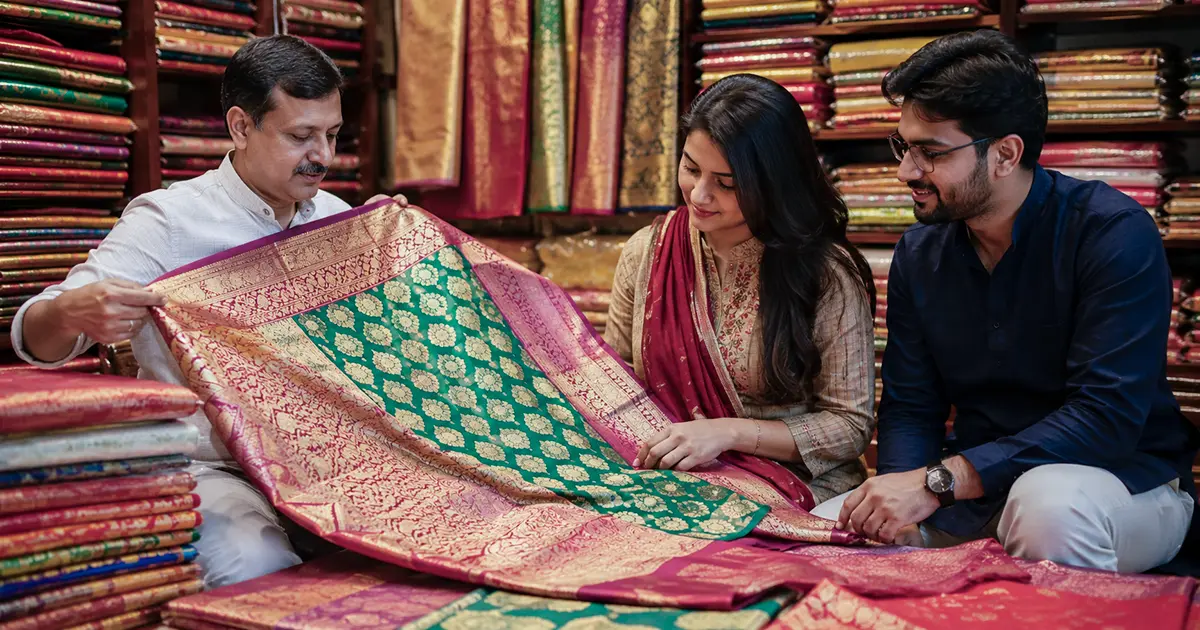
Katan silk is woven in a plain or twill pattern, using twisted warp and weft threads. This high thread density creates a heavy, substantial fabric weight. It provides the perfect structural canvas for the dense, elaborate gold and silver zari brocades (known as *Kimkhab*), where the background silk is almost entirely covered by metallic creepers, floral vines, and traditional motifs.
Key Characteristics of Katan Silk: - Texture: Exceptionally smooth, soft, and supple to the touch, with a heavy, substantial drape. - Luster: A rich, deep, natural metallic shine that catches light beautifully without appearing synthetic or overly bright. - Weight: Typically ranges from 700 to 1,200 grams, depending on the density of the zari brocade. - Occasion Suitability: Grand bridal weddings, prestigious family gatherings, and luxury reception events. - Heirloom Longevity: Extremely durable; if stored properly, a pure handloom Katan silk saree can last for generations, acquiring a vintage charm.
2. Kora Organza: The Ethereal, Modern Banarasi Elegance
In complete contrast to the heavy, dense structure of Katan silk stands the delicate, sheer, and airy Organza Banarasi Sarees, historically known in handloom circles as *Kora Silk*. This fabric represents a youthful, lightweight reimagining of traditional Banarasi luxury, making it highly trending in modern ethnic fashion.
The Science of Sheerness *Kora Organza* is woven using degummed, tightly twisted natural silk yarns. Pure raw silk filaments are coated with a natural protein gum called sericin. In standard silk weaving, this gum is removed prior to spinning to make the thread soft. For Kora Organza, the gum is retained on the yarn during the weaving process.
This organic protein gum gives Kora Organza its signature: 1. Semi-Transparency: A delicate, glass-like sheerness that drapes like an ethereal cloud. 2. Crisp Stiffness: A structural bounce that allows the saree to hold its shape, flare, and pleats beautifully. 3. Subtle Shimmer: A gentle, morning-dew shimmer that reflects light softly.
Key Characteristics of Kora Organza: - Texture: Slightly crisp, dry, and structured, with an incredibly lightweight and breathable feel. - Transparency: High transparency, making it ideal for elegant layered styling and contrasting blouses. - Weight: Very light, typically ranging between 350 to 550 grams, including the zari borders. - Occasion Suitability: Daytime wedding celebrations, summer festive garden parties, elegant high-tea events, and contemporary bridal wear. - Styling Qualities: Holds a sculptural shape, creating a youthful, elegant silhouette.
Technical Comparison Matrix: Katan Silk vs. Kora Organza
For professional retail curators, comparing these two iconic fabrics side-by-side helps clarify their distinct market positions:
| Feature | Pure Katan Silk | Kora Organza (Kora Silk) |
|---|---|---|
| Yarn Processing | Highly twisted, degummed soft silk threads | Raw, un-degummed silk yarns with organic gum |
| Fabric Weight | Heavy (700g - 1200g) | Ultra-lightweight (350g - 550g) |
| Opacity | 100% Opaque | Semi-transparent / Sheer |
| Hand-Feel | Supple, smooth, and soft | Crisp, structured, and airy |
| Weaving Style | Dense brocades (*Kimkhab*, *Jangla*) | Isolated motifs (*Kadwa Booti*, *Meenakari*) |
| Best Season | Autumn, Winter, and Indoor Festive | Spring, Summer, and Outdoor Destination |
| B2B Margin Potential | High ticket, 50% - 65% margins | High turnover, 40% - 55% margins |
3. The Art of Zari Implementation on Both Fabrics
The choice of metallic thread (Zari) varies significantly between these two fabrics to match their weight parameters and drape dynamics.
Zari on Katan Silk Because Katan silk is a heavy fabric, it can support thick, heavy metallic zari work. Weavers create grand, all-over designs like *Shikargah* (royal hunting scenes) or *Jangla* (dense floral networks) using robust copper-plated or pure silver-plated zari. The density of the backing fabric prevents the heavy zari threads from pulling or distorting the silk weave.
Zari on Kora Organza Because Kora Organza is lightweight and delicate, dense zari work would cause the sheer fabric to tear or sag. Master weavers instead utilize delicate stand-alone motifs, such as *Kadwa Booti* (individual hand-woven flowers) or thin *Zari Borders*. These motifs are woven with ultra-fine, lightweight metallic threads. Often, weavers incorporate the *Meenakari* technique (inlaying colored resham silk threads) to introduce vibrant color contrasts without adding unnecessary weight to the organza.
4. Care, Preservation, and Boutique Maintenance
To maintain the pristine quality and longevity of your boutique inventory or personal collection, these premium fabrics require distinct handling:
Caring for Your Katan Silk Collection - Folds: Fold the saree with a soft, clean cotton muslin insert to prevent the heavy zari from rubbing and snapping. Rotate the folding lines every 3 to 6 months to prevent fabric memory creases. - Hanging: Never hang heavy Katan silk sarees on metal hangers for extended periods; the weight can stretch the silk yarns and distort the shoulder seams. - Washing: Strictly dry clean only.
Caring for Your Kora Organza Collection - Folds: Organza should be folded loosely with acid-free tissue paper inserts between folds to prevent sharp creases, which can break the stiff silk fibers. - Hanging: Organza can be stored on padded hangers inside a breathable garment bag. - Ironing: Never apply a hot iron directly onto organza. Always use a protective cotton cloth layer and iron on a low silk setting to prevent the raw silk gum from melting.
5. B2B Sourcing Strategy for Boutiques and Showrooms
When curating your seasonal ethnic wear collections, balancing your inventory between Katan Silk and Kora Organza ensures you capture different segments of the market.
- Bridal Season (October to March): Prioritize heavy Bridal Banarasi Sarees in Katan Silk. Your bridal clients seek heavy, traditional, and prestigious pieces. Keep a secondary selection of premium pastel organzas for brides to wear during daytime pre-wedding events like Mehndi or Haldi.
- Spring/Summer Festive Season (April to September): Shift your inventory focus toward Organza Banarasi Sarees. Shoppers during hot summer months demand light, breathable, and highly comfortable fashion that doesn't compromise on elegance.
- Reseller Channels: Lightweight organzas are highly economical items for international shipping. Their lightweight packaging profile reduces courier fees per unit, making them ideal for online resellers targeting global markets in the US, UK, and Canada.
Whether your boutique clients prefer the regal weight of twisted Katan silk or the sheer, modern elegance of Kora organza, sourcing directly from Weave 365 guarantees certified purity, direct weaver pricing, and exemplary artisan craftsmanship. Connect with our B2B team today to curate your next luxury collection.